
If you think TikTok is just dance challenges and teenagers lip-syncing, you are half-right and completely wrong. Yes, the dance content exists. But in Nigeria, TikTok has quietly become the largest social media platform by ad reach, with 47.8 million users aged 18 and above as of late 2025, up 43.4% in a single year. A GeoPoll survey of urban Nigerians aged 18 to 34 found that 66% use TikTok regularly and 71% of those users open the app daily. That daily engagement rate rivals WhatsApp. Meanwhile, Nigerian e-commerce sellers are using TikTok Live to sell ₦70,000 to ₦500,000 worth of product in a single session, without a storefront, without Jumia commissions, and without a formal ad budget. The question is not whether your brand should be on TikTok. It is whether you can afford to ignore a platform where 47.8 million Nigerian adults are already spending their attention.
Why TikTok Matters for Nigerian Brands (Beyond the Dance Stereotype)
The objection is always the same: "My customers are not on TikTok, it is just children dancing." Here is the data that should change your mind. According to DataReportal's Digital 2026 Nigeria report, TikTok's adult ad audience in Nigeria grew by 14.5 million users between late 2024 and late 2025. The largest age segment is 25 to 34, accounting for 46.7% of the audience. These are working adults with purchasing power, not teenagers. The 18 to 34 bracket makes up 72.7% of all TikTok users in Nigeria.
TikTok now commands 51.15% of short-form video usage among Nigerian users, according to the GeoPoll Top Trends survey cited at the Top Trends 2026 conference. Facebook Stories captures 23.45%. YouTube Shorts holds 11.55%. Instagram Reels trails at 10.30%. If you are investing in Instagram Reels but ignoring TikTok, you are spending money on the platform with one-fifth the market share.
Here is what makes TikTok different from Instagram or Facebook for e-commerce: the For You Page algorithm pushes your content to people who do not follow you. On Instagram, your post reaches your followers and maybe a small percentage beyond. On TikTok, a brand account with 200 followers can get a video pushed to 50,000 people if the content resonates. This is why a wig maker in Lagos with no marketing budget amassed 63,000 followers and nearly one million likes by simply posting videos of his wig-making process. Customers watch, ask questions in the comments, and place orders through WhatsApp. No ad spend, no agency, no storefront.
The practical implication for Nigerian e-commerce sellers is this: TikTok is not a brand-awareness channel that you run alongside your "real" marketing. For fashion, food, and beauty brands in particular, it is increasingly the channel where discovery and purchase decisions happen. A menswear trader in Lagos reported making ₦70,000 daily through TikTok Live sessions. A fashion brand owner said she made over ₦500,000 in three nights of going live consistently. These are not vanity metrics. These are sales figures, paid through bank transfers, confirmed by DMs.
Four Content Pillars That Drive Nigerian TikTok Sales
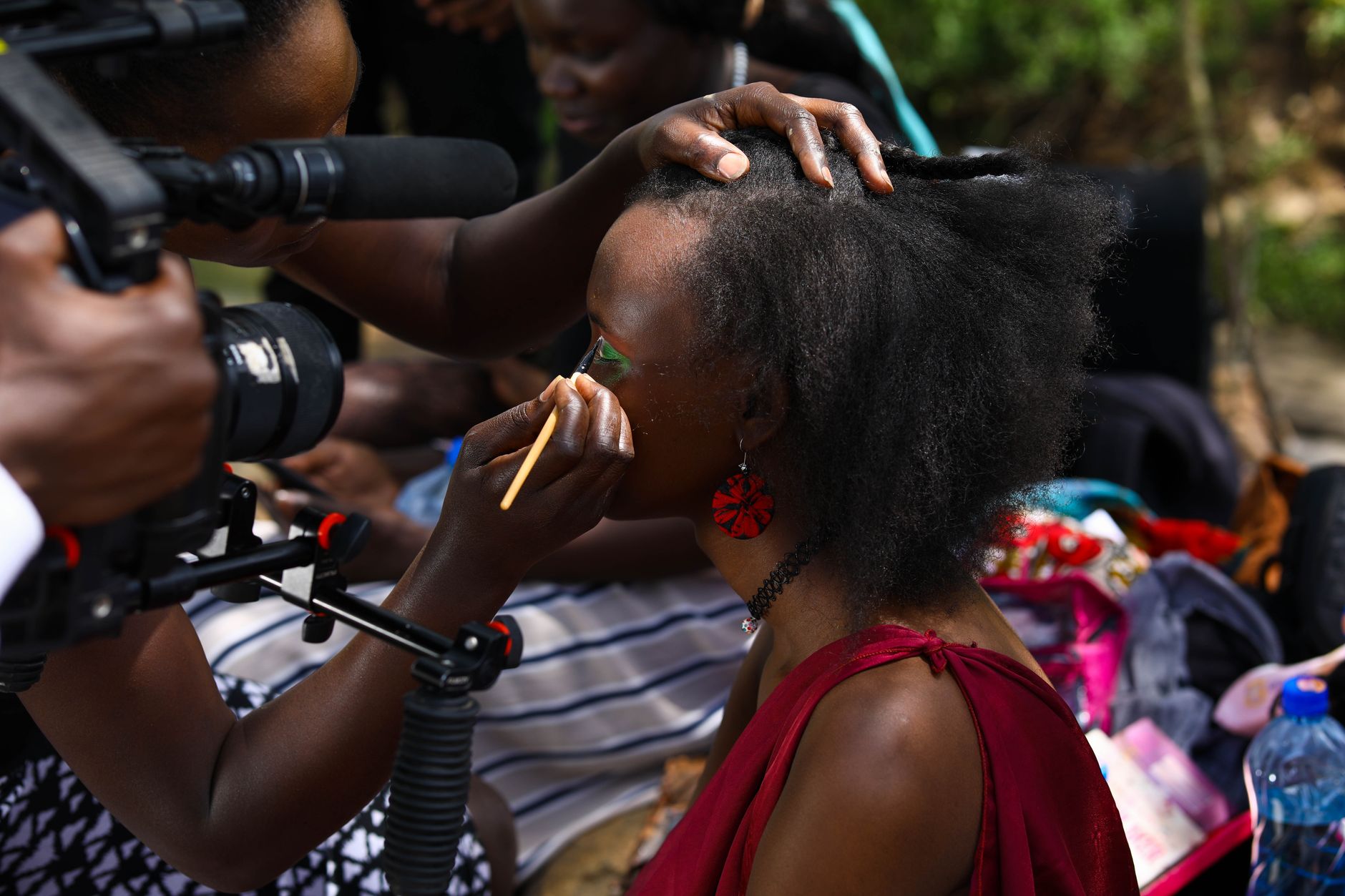
TikTok marketing strategy for Nigerian brands does not require elaborate production. It requires consistency across four content pillars that each serve a different job in the buyer journey. Here is what each pillar does, with concrete examples from Nigerian business types.
Pillar 1: Behind-the-Scenes Content
Behind-the-scenes content shows how your product is made, sourced, or prepared. It builds trust before the sale by making the buyer feel like an insider. For a fashion brand in Lagos, this means filming the fabric selection process at Balogun Market, showing the cutting and sewing on a sewing machine in your Surulere studio, or recording the moment you pack an order for dispatch. The camera does not need to be professional. A phone propped against a stack of fabric, recording you at work, is more authentic than a polished studio shoot.
Nigerian audiences respond to market scenes specifically because they recognize the environment. A video showing you haggling over ankara prices at Mile 12 market, or walking through the textile section of a market with fabric in hand, signals authenticity that a sanitized studio video cannot match. The same logic applies to food brands: a caterer in Abuja filming the prep of jollof rice for a 200-guest event, from washing rice to arranging chafing dishes, gives potential customers confidence in your process before they pay ₦150,000 for a party package.
The mistake to avoid: behind-the-scenes does not mean boring. A 15-second clip of you inspecting fabric, overlaid with a trending audio, outperforms a 3-minute walkthrough with no hook. Lead with the most visually interesting moment, then let the algorithm push it.
Pillar 2: Tutorial and How-To Content
Tutorials position your brand as the expert and give viewers a reason to save and revisit your content. For a skincare brand in Port Harcourt, this means a 30-second video showing how to apply your turmeric soap and shea butter moisturizer in the correct order, with the products visible and labeled. The viewer learns something useful, associates that knowledge with your brand, and when they need the product, they remember where they saw it.
Tutorials work because they answer a specific question the viewer already has. "How to clear dark knuckles," "how to style a gele in five minutes," "how to store moi moi so it lasts a week" are all tutorial topics that a beauty brand, a fashion brand, or a food brand could own. The key is to make the tutorial genuinely useful, not a disguised product pitch. If the first three seconds are a sales plug, the viewer scrolls. If the first three seconds deliver value, they watch to the end, and the product mention in the final five seconds feels earned.
Pillar 3: User-Generated Content and Unboxing

User-generated content (UGC) is videos your customers create about your product, and unboxing videos are a specific sub-type where a customer films themselves opening a delivery. For Nigerian e-commerce, unboxing content is gold because it solves the trust problem that kills online sales: "Will the product look like what I ordered?" A fashion brand that ships a dress from Lagos to a customer in Enugu, and that customer posts a TikTok unboxing the package and trying on the dress, is creating social proof that no ad copy can replicate.
The practical approach: include a small card in every package asking customers to tag your brand on TikTok if they post an unboxing video. Offer a 5% discount on their next order for every video they post that tags you. You do not need to pay them. You are giving a discount you would probably offer anyway, and in exchange you get content that converts better than anything you could produce yourself.
Pillar 4: Trend Participation
Trend participation means taking a trending audio, format, or challenge and adapting it to your product niche. This is the pillar that feels most like "dancing" but does not require dancing. A food brand in Abuja can use a trending audio about "things that make sense" and overlay it with shots of their packaged food products. A skincare brand in Port Harcourt can use a trending "before and after" format to show the difference their product makes.
The rule for trend participation: adapt, do not copy. If the trend is a dance, you do not need to dance. Use the audio with your own visual that fits the tone. If the trend is a text-overlay format, swap the text to fit your product. The algorithm rewards videos that use trending audio because it keeps users on the platform longer. You are borrowing the algorithm's momentum, not trying to go viral on your own.
Choosing TikTok Creators in Nigeria
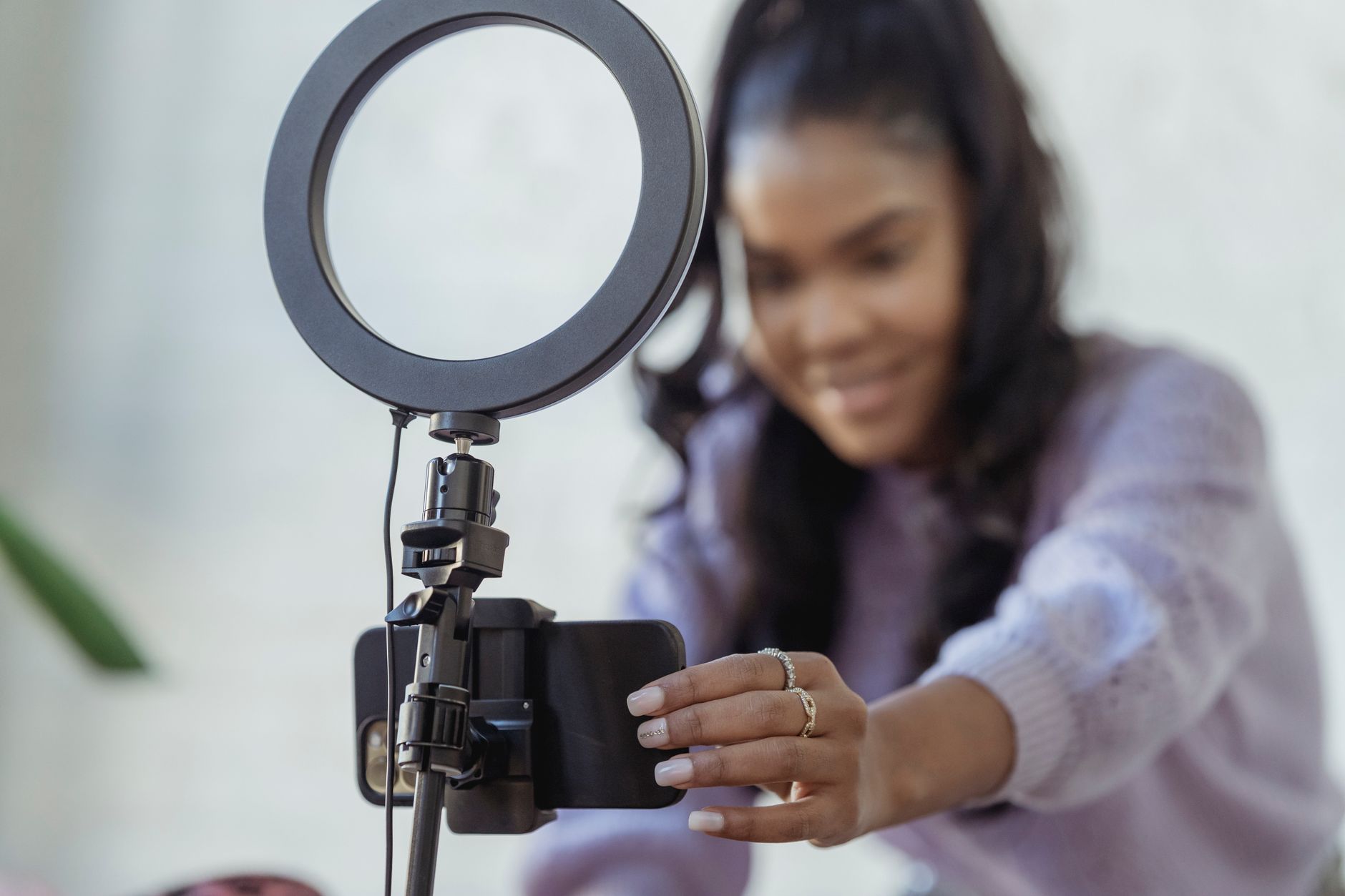
Creator partnerships on TikTok Nigeria are not about finding the biggest name. They are about finding the right engagement rate for your budget. Here is how to vet, negotiate, and structure collaborations without falling into the big-name influencer trap that wastes your money.
Vetting Creators: What Actually Matters
Follower count is the least useful metric when choosing a TikTok creator. The two metrics that matter are engagement rate and audience relevance. According to industry data on Nigerian TikTok creator rates, the engagement rate sweet spot is 5% to 10%. An influencer with 50,000 engaged followers will outperform one with 500,000 followers and a 1% engagement rate every time.
To vet a creator, check three things: open their last 10 videos and calculate the average views per video (not just their top video, which may be an outlier), read the comments to see if the audience is real and engaged or full of generic bot responses, and check if their audience matches your customer demographic. A fashion creator with 30,000 followers whose audience is 70% women aged 25 to 34 in Lagos is more valuable to a fashion brand than a comedy creator with 200,000 followers whose audience is 80% men aged 18 to 24 across Nigeria.
Realistic Rate Ranges in Naira
Here are the realistic TikTok creator rates in Nigeria as of 2026, based on data from TIMA Agency's influencer marketing cost guide and Metrohyp's Nigerian TikTok monetization breakdown:
- Nano creators (1,000 to 10,000 followers): ₦5,000 to ₦50,000 per post. Small but highly engaged audiences. Ideal for testing product-market fit.
- Micro creators (10,000 to 50,000 followers): ₦50,000 to ₦200,000 per post. Strong niche communities. The best value tier for most Nigerian e-commerce brands.
- Mid-tier creators (50,000 to 200,000 followers): ₦200,000 to ₦1,000,000 per post. Higher reach but diminishing engagement rates. Use for product launches and awareness pushes.
- Macro creators (200,000+ followers): ₦1,000,000 to ₦5,000,000+ per post. Massive reach but often low conversion. Approach with caution unless you have a brand-awareness budget, not a sales budget.
For a Nigerian e-commerce brand with ₦150,000 to ₦300,000 to spend on creator partnerships, the most efficient strategy is to work with three to five micro creators (₦50,000 each) rather than one mid-tier creator. You get audience diversity, more total content assets, and if one creator's video flops, you have four others that might hit. Putting your entire budget on one creator is a single point of failure.
Structuring Collaborations
When you negotiate with a creator, be specific about deliverables. "One TikTok video, 15 to 30 seconds, featuring [product], posted between 6pm and 9pm on [date], with a caption that includes the promo code [CODE] and a call to action to check the link in bio." Vague briefs produce vague results. Also negotiate usage rights: if you want to turn their video into a Spark Ad (more on this below), you need their authorization code. Build that into the agreement upfront rather than asking for it after the video is posted.
Avoid the biggest trap in Nigerian influencer marketing: paying a celebrity or mega-creator ₦3,000,000 for a single post and expecting sales. Celebrities drive awareness, not conversions. Their audience follows them for entertainment, not product recommendations. If your goal is revenue, not reach, your money goes further with five micro creators than one celebrity. For a deeper breakdown of how to avoid marketing scams in Nigeria, our guide on hiring a digital marketer in Nigeria without getting scammed covers red flags and verification steps that apply equally to creator partnerships.
TikTok Ad Formats: What to Use and When
Organic content gets you started. Paid ads scale what works. TikTok offers three ad formats that matter for Nigerian e-commerce brands, and they are not interchangeable. Here is what each format does, what it costs in naira, and when to use it.
Spark Ads: Boost What Already Works
Spark Ads let you turn an organic TikTok post into a paid ad, either from your own account or from a creator's account (with their authorization). Because the ad uses the original post's likes, comments, and shares, it carries social proof that a freshly produced ad cannot fake. Spark Ads carry social proof from existing engagement — likes, comments, and shares — that standard In-Feed Ads built from scratch cannot replicate, and industry data consistently shows higher engagement and completion rates compared to standard In-Feed Ads.
Use Spark Ads when you have an organic post that is already performing well (above your average views and engagement) and you want to push it to a wider audience. This is the format that creator partnerships feed into: you pay a creator for a video, the video performs well organically, and you boost it as a Spark Ad to scale reach. For Nigerian e-commerce brands on a budget, this is the format to start with.
In-Feed Ads: Build From Scratch
In-Feed Ads are native ads that appear in the For You Page, built from scratch in TikTok Ads Manager. You have full control over the creative, the CTA (Shop Now, Download, etc.), and the targeting. Unlike Spark Ads, the engagement does not stay on your profile after the campaign ends. But In-Feed Ads support all campaign objectives including conversions and app installs, making them the better choice when you need direct-response tracking.
Use In-Feed Ads when you want to A/B test different creatives, run conversion-optimized campaigns with a specific cost-per-acquisition target, or when you do not have an organic post that is performing well enough to boost. In-Feed Ads require a minimum daily budget of $20 per ad group (approximately ₦30,000) and $50 per campaign (approximately ₦75,000 to ₦85,000), according to payment guides for Nigerian TikTok advertisers.
TopView Ads: Premium Placement for Big Budgets
TopView Ads are the first thing a user sees when they open the TikTok app. They are not auction-based. They are reservation-based, purchased through TikTok's managed service team, and they carry premium pricing. TopView made its debut in Nigeria in mid-2026, with Coca-Cola as the first advertiser to use the format in the market. According to industry pricing data from Stackmatix, TopView ads typically cost $10 to $20 CPM, with daily minimums often exceeding $50,000.
TopView is not for SMEs. It is for corporate brands with multi-million naira awareness budgets. If you are a growing e-commerce seller in Nigeria, skip this format entirely. The same budget on Spark Ads or In-Feed Ads will produce measurable sales, not just impressions.
Here is the side-by-side comparison you can screenshot for a budget conversation with your co-founder or finance team. All naira figures are approximate and move with the USD/NGN exchange rate, so verify current rates before committing budget.
| Ad Format | Cost in Naira (Approx.) | Minimum Budget | Reach Potential | Best Use Case |
|---|---|---|---|---|
| Spark Ads | CPM ₦450 to ₦1,200 (4% lower than In-Feed) | $20/day per ad group (~₦30,000) | Medium to high, boosted by social proof | Boosting top-performing organic posts or creator content. Best starting point for SMEs. |
| In-Feed Ads | CPM ₦450 to ₦1,200; CPC ₦30 to ₦120 | $50/day per campaign (~₦75,000 to ₦85,000) | High, auction-based | Direct response, conversion tracking, A/B testing creatives. Use when you need specific CPA targets. |
| TopView Ads | CPM $10 to $20 (₦15,000 to ₦30,000+) | Often $50,000+ daily (~₦75M+), reservation-based | Massive, first impression on app open | Corporate brand awareness campaigns. Not suitable for SME budgets. |
A note on ad spend versus management fees: just as we flag in our digital marketing costs in Nigeria breakdown, any provider who bundles ad spend and management fees into one figure without itemizing them is making it impossible for you to know where your money goes. Always insist on separation. For TikTok specifically, agency management fees in Nigeria typically run 10% to 20% of ad spend for enterprise accounts, or fixed retainers of ₦50,000 to ₦200,000 per month for growing businesses.
Posting Cadence and Content Production on a Budget
The advice to post three to five times per day on TikTok is written for American brands with content teams, unlimited data plans, and stable electricity. For a Nigerian solo founder running an e-commerce business, that cadence is unrealistic and will burn you out in two weeks. Here is a posting schedule that accounts for Nigerian reality.
Realistic Posting Schedule
Post three to four times per week if you are a solo founder or small team. That is 12 to 16 videos per month. The goal is consistency, not volume. TikTok's algorithm rewards accounts that post regularly over months, not accounts that flood the platform for two weeks and then disappear. Quality and consistency beat quantity every time.
Here is how to batch production to manage data costs and power outages. Pick one day per week (Saturday morning works well if your week is busy with orders) and shoot four to six short videos in one session. You do not need perfect lighting or a ring light. Natural window light between 10am and 2pm is better than most artificial setups. Film your behind-the-scenes clips, your tutorial clips, and a couple of trend-participation videos in the same session. Edit on your phone using TikTok's built-in editor or CapCut (free). Schedule the videos to post throughout the week so your account stays active even when you are fulfilling orders or dealing with a power outage.
Managing Data Costs
TikTok is a data-heavy app. Uploading one 30-second video can consume 20 to 50MB of data. If you are on an MTN or Glo plan at ₦1,000 to ₦2,000 per gigabyte, your monthly TikTok data cost for uploading four videos per week could be ₦5,000 to ₦15,000. Here is how to keep it manageable: upload over WiFi when available (many co-working spaces and cafes in Lagos, Abuja, and Port Harcourt offer free WiFi), use the "Save Draft" feature in TikTok to prepare videos offline and upload when you have a stable connection, and turn off auto-play for your For You Page when you are not actively researching trends to conserve data.
Local Language Content
A quick note on language: content in local languages, whether Yoruba, Pidgin, Igbo, or Hausa, consistently overperforms on Nigerian TikTok. A skincare brand in Port Harcourt that films a tutorial in Pidgin English will reach an audience that feels personally addressed, not sold to. A food brand in Abuja that narrates a recipe in Hausa will build a community that comments, shares, and buys. You do not need subtitles for every video, but adding text overlays in Pidgin or your local language increases watch time and share rate. This is not about excluding anyone. It is about signaling cultural authenticity, which is the currency that drives engagement on Nigerian TikTok.
Measuring What Matters on TikTok
Views and likes are not business outcomes. If your TikTok strategy report does not connect to revenue, you are measuring activity, not results. Here are the metrics that actually matter for a Nigerian e-commerce brand on TikTok.
Metrics That Tie to Sales
- Promo code redemptions: Give every TikTok campaign a unique promo code (e.g., TIKTOK15 for 15% off). When an order comes in with that code, you know exactly which content drove the sale.
- WhatsApp inquiries: Track the volume of WhatsApp messages you receive within 48 hours of posting a TikTok video. If a video gets 10,000 views but generates zero WhatsApp messages, those views did not translate into buying intent.
- Clicks to your Jumia store or website: If you link to your storefront in your bio or through TikTok's link feature, track the traffic spike using UTM parameters. Google Analytics (free) will show you exactly how many visitors came from TikTok and whether they made a purchase.
- Click-through rate (CTR): TikTok's benchmark CTR in Nigeria ranges from 0.6% to 1.8%, according to data from Bizmartek Digital. If your paid ad CTR is below 0.6%, your creative is not resonating. If it is above 1.8%, scale that ad.
- Cost per acquisition (CPA): Total ad spend divided by number of orders attributed to TikTok. If you spent ₦100,000 on Spark Ads and got 8 orders, your CPA is ₦12,500. Compare that to your average order value. If your average order is ₦15,000, your CPA of ₦12,500 means you are profitable on the first purchase.
Metrics That Waste Your Time
Follower count, video views, and profile visits are tracking metrics, not success metrics. They tell you whether your content is reaching people, not whether it is making money. A brand with 500 followers and ₦200,000 in monthly TikTok-driven sales is in a better position than a brand with 50,000 followers and ₦0 in attributable revenue. Every TikTok metric you track should connect to one of three things: did someone click through to your store, did someone message you on WhatsApp, or did someone use your promo code? If the answer is no across all three, the views are vanity.
Next Steps
You do not need to launch everything at once. The most effective TikTok marketing strategy for Nigerian brands starts with one pillar, one content type, and one month of consistent posting before you evaluate results. Here is a 30-day starting plan: pick the content pillar that matches your product type (behind-the-scenes for fashion, tutorials for beauty, unboxing for any physical product), commit to posting three to four times per week, set up a unique promo code for TikTok, and track WhatsApp inquiries and promo code redemptions. If after 30 days you have data showing that TikTok content is driving inquiries or sales, then consider creator partnerships and paid Spark Ads to scale what is working.
If you are already running Facebook or Instagram ads and want to understand how TikTok fits alongside your existing channels, our guide on digital marketing in Nigeria and what ₦50k to ₦500k buys breaks down how each channel contributes to the buyer journey. And if you are running paid ads on Meta platforms and struggling with payment issues that keep your campaigns from going live, our guide on running Facebook ads in Nigeria with a naira card covers the payment workarounds that actually work in 2026. The same virtual USD card solutions that solve Meta payment failures apply to TikTok Ads Manager, which processes entirely in USD.
If you want a straightforward conversation about whether TikTok makes sense for your specific product, your budget, and your current stage of growth, we are available. No deposit required, no pressure to commit, no 30-day promises. We will review what you sell, where your customers spend time, and whether TikTok is the right channel for you or whether your money is better spent elsewhere. Reach out through our contact page or send a WhatsApp message, and we will respond within one business day. The more you understand how TikTok actually works for Nigerian e-commerce, the harder you are to scam and the smarter your first naira goes.
Frequently Asked Questions
Is TikTok effective for Nigerian e-commerce brands?
TikTok has 47.8 million adult users in Nigeria as of late 2025, with 72.7% aged 18 to 34. It is now Nigeria's largest social platform by ad reach, larger than Facebook and Instagram combined in short-form video market share.
What is the difference between TikTok Spark Ads and In-Feed Ads?
Spark Ads let you boost organic posts or creator content with their existing engagement, delivering 142% higher engagement and 43% higher conversion rates per TikTok data. In-Feed Ads are built from scratch in Ads Manager and are better for A/B testing and direct response campaigns with specific CPA targets.
How much do Nigerian TikTok creators charge per post?
TikTok creator rates in Nigeria range from ₦5,000 to ₦50,000 for nano creators (1K to 10K followers), ₦50,000 to ₦200,000 for micro creators (10K to 50K), and ₦200,000 to ₦1,000,000 for mid-tier creators (50K to 200K). Micro creators offer the best value for most Nigerian e-commerce brands.
What is the minimum budget for TikTok ads in Nigeria?
The minimum daily budget for TikTok Ads Manager is $50 per campaign (approximately ₦75,000 to ₦85,000) and $20 per ad group (approximately ₦30,000). For in-app promote, packages start at ₦1,000 to ₦2,000 per day. A realistic test budget is ₦150,000 to ₦250,000.
How often should a Nigerian brand post on TikTok?
Three to four times per week is realistic for solo founders and small teams. Batching content into one production day per week manages data costs and power outage disruptions. Consistency over months outperforms high-volume posting for two weeks.